The online discovery process is changing as more people use artificial intelligence chatbots to find information. That means brands need to evolve their awareness approach, according to a new report from Semrush. The study analyzed 126 million AI prompts in order to learn more about the sources that AI chatbots reference, and what those sources can reveal in terms of AEO and GEO approaches.
Semrush’s AI Visibility Index first looked at the variances in resourcing among the different AI tools.
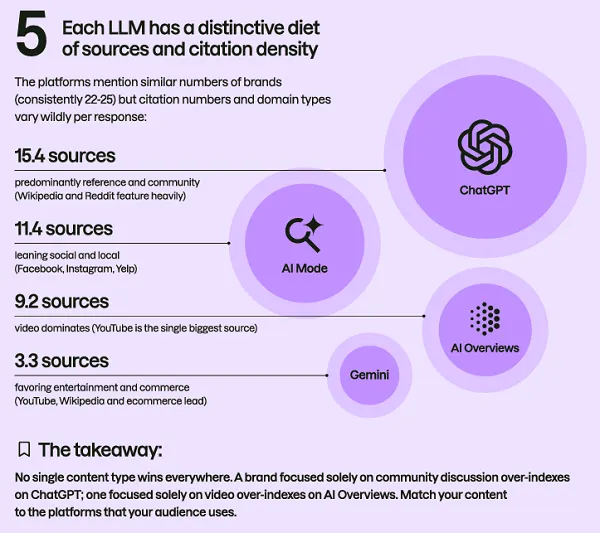
As shown in this image, each AI system is more likely to reference a certain set of resources, which is important to note for targeting and aligning with popular chatbots.
Based on this research, the Semrush team came up with a list of guidelines for AI citations, based on what AI chatbots look for in terms of source references.
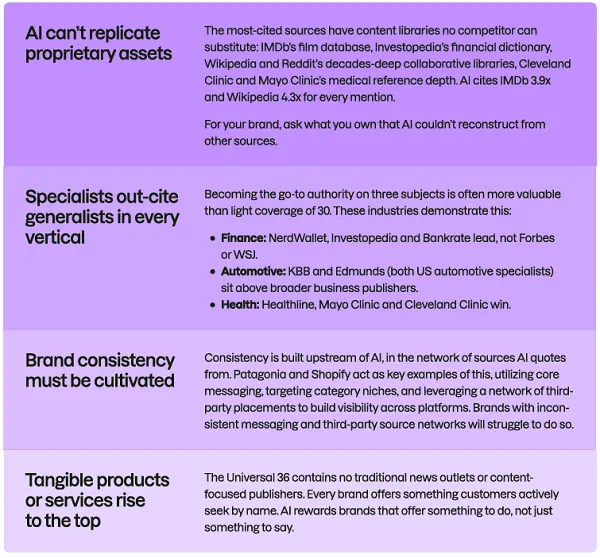
According to Semrush’s notes, AI chatbots primarily cite specific resources that specialize in certain topic areas, as opposed to more general information providers.
As per Semrush: “The brands AI describes most consistently aren’t expanding content for volume’s sake. They publish the right content on the right surfaces, owned and third-party, so AI systems receive a consistent, coherent signal about who they are and what they do.”
Focus is key in AI optimization, and clear messaging offers a better set of references to reinforce expertise.
Those references vary by industry.
“What wins depends on what kind of business you are, and the playbooks don’t transfer,” the report said. “Marketplaces (Amazon, Walmart, eBay) win through transaction scale and product depth. Community platforms (Reddit, Wikipedia, Quora, Fandom) win through user-generated content libraries. Brands with strong citation infrastructure (Patagonia, Shopify, Cleveland Clinic, NerdWallet) win by being described consistently across the sources AI quotes from.”
Building on this, the report also looked at overall reference sources for AI chatbots, which can play a complementary role when it comes to solidifying brand presence and authority.
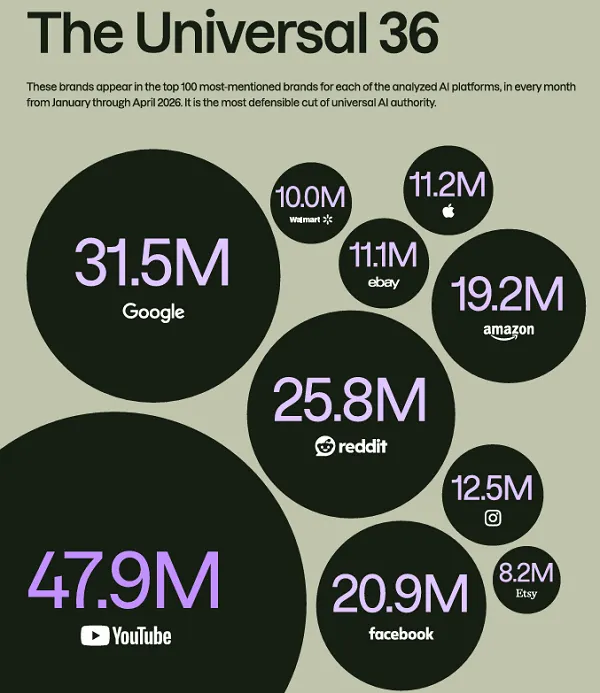
Brand references within the search results on these platforms act as powerful signals to AI systems, reinforcing these brands as the top reference points in their respective industries.
Based on this insight, the report outlines four key pillars of brand visibility for AI chatbot presence.
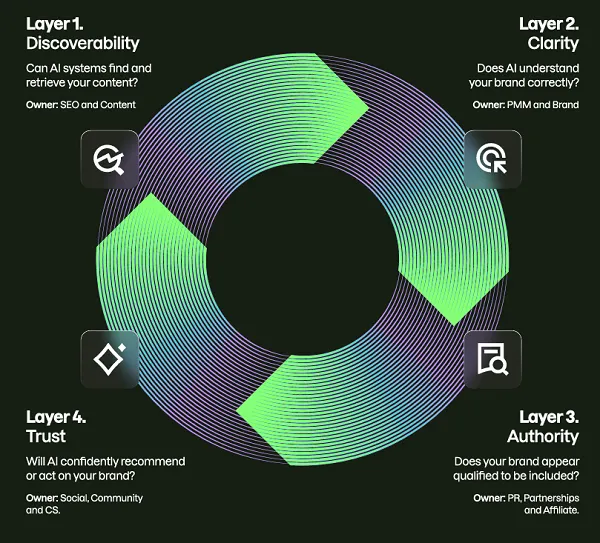
The report also provides in-depth explainers on the key elements of GEO, and discusses how brands can maximize their visibility in the AI discovery era.
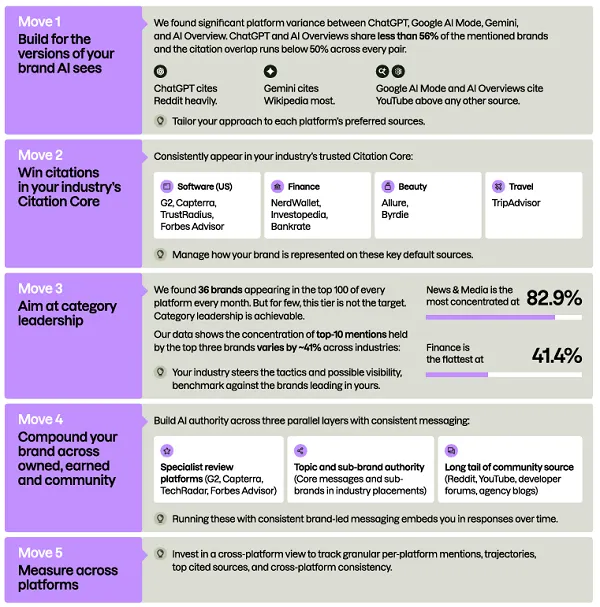
The report’s emphasis is that in order to maximize AI citations, brands need to diversify their online presence across both industry-specific platforms and supplemental platforms in order to become top reference sources.
While specifics will vary by industry, marketers need to think beyond their owned assets, and consider how to maximize brand mentions in these key sources.
“SEO has trained marketers to think of their own domain as the primary asset,” the report said. “But AI search most often treats third-parties as the primary signal for who should be mentioned. … Across the platforms we measured, the highest-surplus brands are reference and review platforms, not product brands. Think Wikipedia, Healthline, and IMDb. … Every brand on this list is a resource AI uses to construct an answer about something else.”
This approach is different from traditional SEO, but as per the report, if marketers “want to build authority, the most direct route isn’t to publish more content on your own domain.”
These are some important notes on the evolution of online discovery, and on how marketers can align their strategy with emerging AI reference processes. And again, with more people asking ChatGPT for assistance, this could become an essential process for brand visibility.