LinkedIn has published a new guide on connecting early B2B buyer engagement signals with ad approaches, in order to help marketers make smarter investment decisions with their ads.
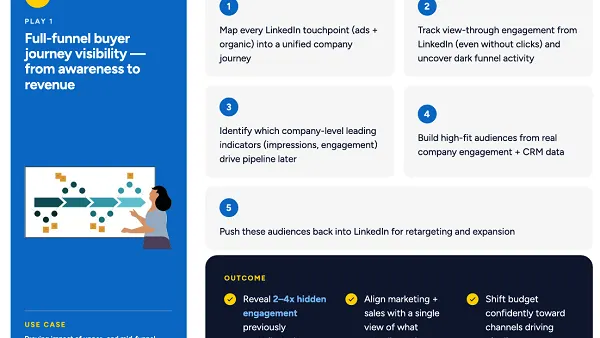
LinkedIn’s 18-page B2B ads attribution guide includes a range of tips on how to better track what impacts B2B buyer decision-making, and how to improve performance reporting by showcasing more relevant data points.
As explained by LinkedIn: “B2B buying is lengthy, nonlinear, and involves multiple stakeholders interacting across dozens of touchpoints. Buyers move between channels, engage anonymously, consume content without clicking, and increasingly use AI-powered tools to inform decisions. By the time an opportunity appears in the pipeline, many of the interactions that shaped the purchase decision have already occurred beyond the reach of traditional measurement systems.”
That can make accurate tracking difficult, which can lead to misattribution of different elements. Often, brands may fail to capitalize on the most relevant and valuable opportunities as a result.
Indeed, according to LinkedIn, only 33% of B2B marketers strongly agree that they’re able to prove to their C-suites that their marketing has made an impact. Meanwhile, 75% said that their measurement systems are falling short.
In order to address this, LinkedIn provided a framework for more accurate performance tracking for B2B marketers, which outlines a range of key considerations to factor in.
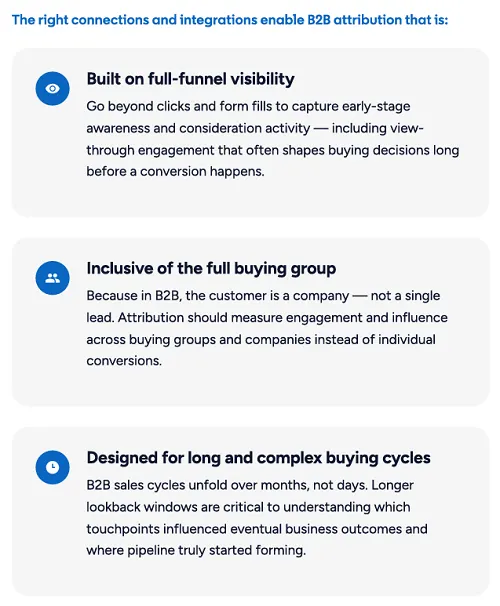
The 18-page guide outlines five frameworks marketers can use to better track their promotional performance, including full, practical breakdowns of each step.
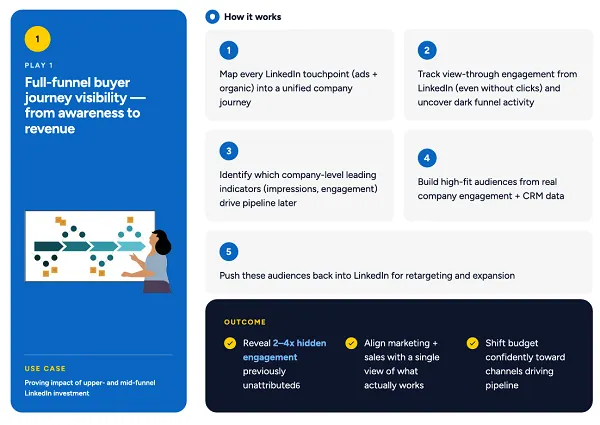
The overview also includes steps to improve “full-funnel visibility,” as well as a list of LinkedIn-approved attribution and analytics partners that can help to add relevant context.
These are some handy notes, which provide actionable steps B2B marketers can undertake to ensure they’re better tracing the steps that lead to business benefits via their LinkedIn activity.
Though it’s also largely a promotional vehicle for LinkedIn’s own analytics tools, some of which are only available to paying users.