LinkedIn has published new research which examines what drives B2B buying decisions, and provides guidance on how brands can ensure that their products are as appealing as possible to prospective clients.
The study, conducted in conjunction with WARC and Lions Advisory, analyzes the factors that go into creating "buyability." The authors examined 700 B2B case studies in order to discover the crucial factors that influence purchase decisions across these examples.
The findings show that many of the key factors that drive decision-making are relational, as opposed to being grounded in product functionality.
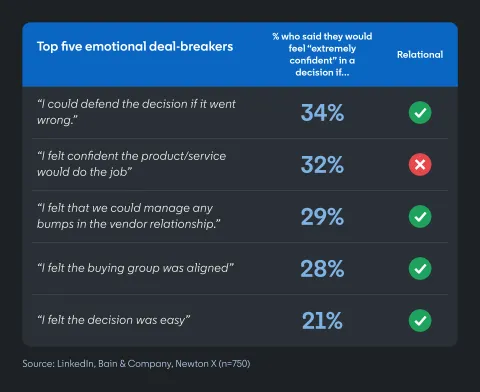
As explained by Mimi Turner, global head of thought leadership strategy at LinkedIn’s B2B Institute: “Confidence in product capability is still very important. But once baseline requirements are met, the top priority is no longer marginal product superiority or price. It becomes whether the decision can be successfully defended even if outcomes go wrong.”
In order to test this, the study measured each of the 700 campaigns against various criteria related to buying signals.
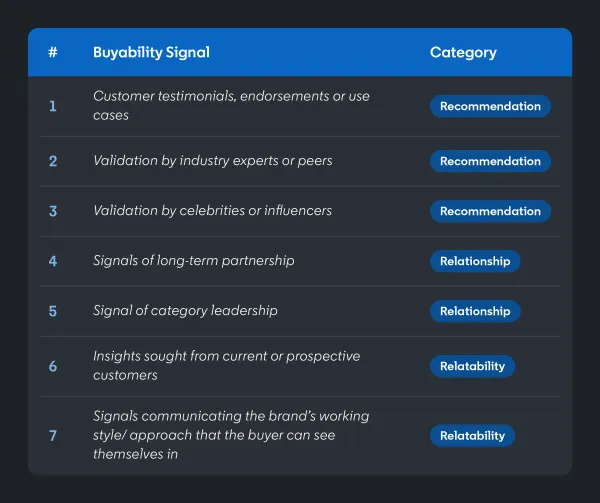
The researchers then segmented the campaigns into "high buyability" campaigns, which were those that included three or more of these signals, and "low buyability" initiatives, which included zero, one or two signals.
The results shoed that high buyability campaigns — meaning those with more focus on testimonials, peer validation and measures of industry leadership — significantly outperformed low buyability campaigns across commercial and brand measures.
“Evaluated against the WARC B2B Effectiveness Ladder, High Buyability campaigns were also 1.7x more likely to be classified as ‘Strategic Assets,’ the highest rung of effectiveness, reserved for initiatives that drive sustained commercial growth,” Turner said.
The data also found that customer-centric insights were present in 83% of high buyability campaigns, which were also four times more likely to feature customer testimonials.
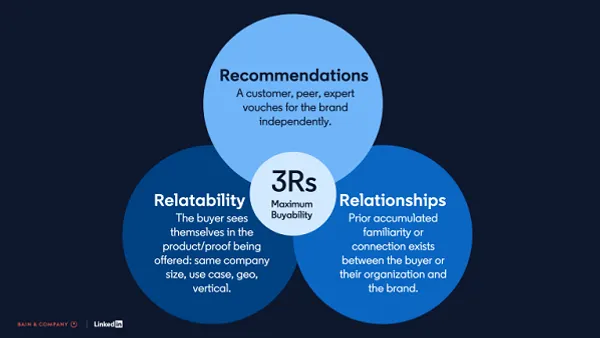
In other words, including more elements that reinforce buying decisions through relatable examples and external validation can have a major impact on reassuring buyers and securing more deals.
LinkedIn further tested these concepts in a campaign for ServiceNow, which specifically focused on these buyability elements.
“The results included a 10x increase in consideration, a 13x increase in unaided brand awareness over three years, and subscription revenue up by 23% over the same period,” Turner said.
Turner said these findings indicate that recommendations, relationships and relatable buying situations can have a significant influence on campaign outcomes.
These notes could help B2B marketers improve the resonance of their campaigns.