Meta announced an update to its AI glasses that will deactivate the device if it senses that a user has tried to conceal the glasses’ recording function. The news comes amid reports that people have attempted to cover up or even remove the LED lights on the front of the glasses that switch on when a recording is in progress.
Last month, tech journalist Joanna Stern reported on her YouTube channel New Things that owners of Meta AI glasses have been paying to have the device’s LED lights removed. These lights are activated when the glasses are recording to let others know when they’re being recorded.
Stern said that people are advertising LED removal services on Facebook Marketplace, and users are paying up to $100 to have someone drill out the light.
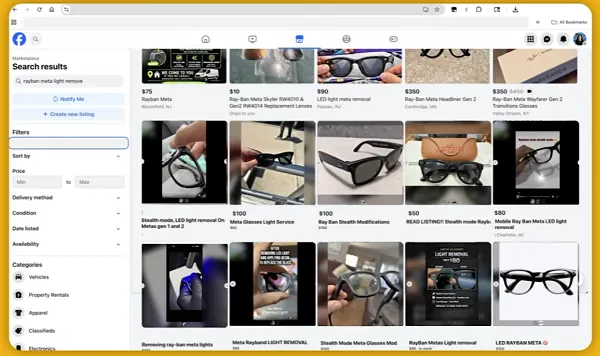
Some of these ads say that the LED removal converts the Meta AI glasses to “stealth mode,” meaning that users can record without others knowing. Which seems like it can only have negative usage implications.
Meta’s update addresses this, with the company disabling the recording functionality whenever tampering of this type is detected.
As per Meta: “Beginning with our second generation of glasses, the camera is automatically disabled if we detect that the capture LED has been blocked. No photos or videos can be taken until we detect that the light is unblocked.”
Meta also said the cameras will be disabled if the system detects that the LED has been physically tampered with or destroyed.
“No other kind of camera has done this and we’re proud to lead the industry forward,” Meta said.
Given that people are making money from LED removals, it seems possible that bad actors could find a way around these measures. But Meta seems confident this update will address concerns.
“In addition to disabling the camera on devices when tampering is detected, we work across Meta to remove ads, posts, and Marketplace listings that advertise these kinds of tampering services and we will take action, up to banning accounts that do this,” Meta said. “We also take legal action against people or businesses that sell services designed for tampering with the capture LED — both on and off our own platforms.”
Given that sales of its AI glasses are rising, and more people have this type of recording option available, it does seem like a significant problem that Meta needs to address before expanding its glasses push.
At the same time, the Financial Times reported that Meta is testing a new prototype of its AI glasses that would capture every moment that a user is wearing them, recording all audio and video that the user experiences at any time.
As per FT: “The $1.5tn social media platform has been advancing a new hardware line of smart glasses that would continuously collect audio while taking photos every few seconds, according to multiple people familiar with the matter. A user could then use AI to help query what they saw or heard, or recall their day.”
FT also said that the LED lights on devices would not be activated during this capture phase.
So maybe Meta hasn’t learned its lesson, and is instead only annoyed that others are monetizing a service that it wants to offer itself.
Which is more in line with Meta’s “move fast and break things” ethos that has seen the company push ahead with potentially harmful products, then deal with any consequences later.
Better to regret something they have done than to regret something they haven’t done, it seems. Meta may be the most blatant example of this approach in action, on a massive scale.