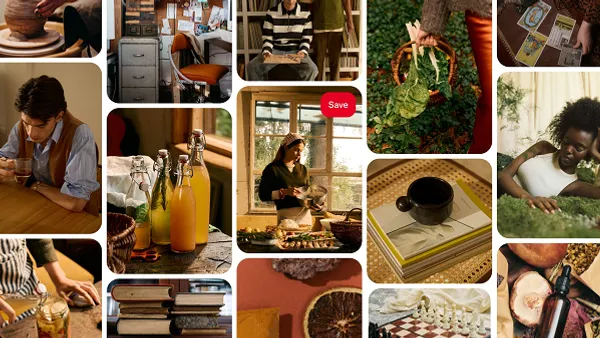
Pinterest published a new report Tuesday exploring how teens use the app and how its more mindful approach to user wellbeing has led to more positive trends among its younger users.
The report is an expansion of Pinterest’s online discovery, offline engagement push, which has seen the platform frame itself as a positive contributor to IRL social engagement, as opposed to a time suck designed to keep people scrolling.
As explained by Pinterest: “At Pinterest, we believe that the best thing you can find online is a reason to go offline. As a visual search and discovery platform, people come to find ideas for what they want to do, make and try next. And no one embodies that more than the teens who use Pinterest every day.”
Pinterest said that its young users, who are using the app more than ever, seek inspiration from Pins and are using the platform to organize ideas through saves and searches in-stream.
“More than 77% of active teen users use the Pinterest search bar to proactively explore their interests, and teens access their settings and home feed controls at nearly twice the rate of other age groups,” Pinterest said. “Because we make it easy to refine your recommendations, teens can shape and reshape their experience as quickly as their interests shift.”
In terms of search specifics, Pinterest said teens are seeking out artistic inspiration, with teen users over-indexing in art search by 1.26 times compared to other age groups.
Pinterest said some of the key search topics among teen audiences are drawing references, anime styles, sketch tutorials, wallpaper and bedroom décor, underlining the usage of the app for offline project discovery.
In order to solidify its support structures for young users, Pinterest said it would be expanding its distraction-free schools nudge to more than 30 countries.
Launched in April 2025, Pinterest’s school hours reminders send alerts prompting young users to put their devices down during the day.
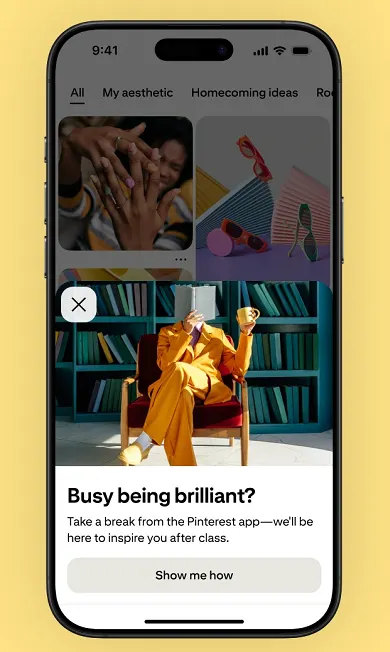
Pinterest said these nudges have been displayed to 4.5 million teens in the U.S., Canada, France, the U.K., Germany and Brazil.
In addition, Pinterest is expanding its (Me)dia Mindfulness resource hub, which is designed to equip teens and adults with digital literacy skills. The platform is also launching a new trauma-informed wellbeing space called "Protect Your Energy,” which the company said will connect “patterns of digital consumption to mental, emotional and physical health.”
Pinterest is also increasing its philanthropic donations to more youth mental health projects and planning to help U.S.-based students connect with mental health resources through their schools.
In many ways, Pinterest’s report feels like a bit of finger-pointing at Meta, which is in the headlines at the moment for its perceived failure to protect young users.
Pinterest seems to be taking the opportunity to deflect any blame for problematic social media usage onto other apps by framing its platform as a positive experience for young people.
“Pinterest is not a social media platform where users get trapped in an endless rabbit hole,” the company said. “Instead, teens tell us that they save Pins with a purpose. They log on, find what they’re looking for and log off to go and make it happen. Because of this, they spend less time on Pinterest per week than in other digital spaces.”
Highlighting that people use its app less, and are therefore less likely to see ads, may be a difficult selling point for a platform that’s reliant on ad revenue. But clearly, Pinterest believes this is a valuable angle for its promotional efforts.