WhatsApp has taken another step towards becoming the WeChat of India, with users in the country now able to pay bills in the app. This integrates another utility function into Meta’s most-used messaging platform.
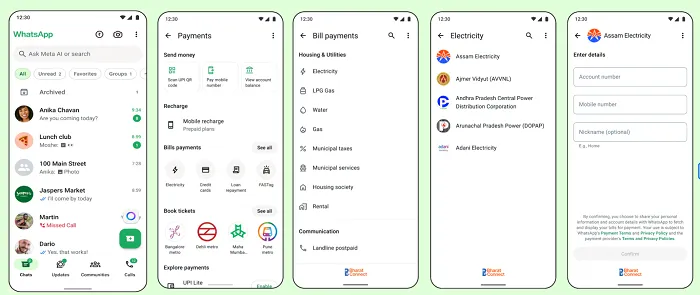
As shown in this example, WhatsApp users in India will now be able to easily pay a range of bill types directly in the app.
As explained by WhatsApp: “Today we are announcing Bill payments in India, making it easier for people to find, manage, and pay their everyday household and utility bills – all within the app. Powered by the Bharat Connect (BBPS) network, the feature gives people access to 22,722 billers across 30 categories, including electricity, gas, water, FASTag, insurance, credit card and loan repayments.”
Meta said the bill payments option will also enable payment management, with users able to access bill summaries and overviews of various accounts.
Which is a significant step. WhatsApp users in India can already recharge their phones, book public transport tickets and access citizen services via government-managed chatbots in the app. The expanded capacity to pay their bills in-stream will build on the app’s utility.
WhatsApp is currently the most used messaging platform in India, reportedly serving more than 800 million local users, according to World Population Review. That means huge potential, and Meta has been working for years to make WhatsApp the local version of China’s WeChat.
WeChat has become almost an essential service in China, with people using the app to manage shopping, bill payments, public transport tickets and more. That utility has made WeChat an increasingly valuable platform, and Meta wants to replicate that approach with its own messaging tools, which would also then facilitate expanded revenue opportunities through advertising and service fees.
But it’s been slow going. Take-up of expanded services within Meta’s apps hasn’t caught on in the EU or the Americas, and regulatory restrictions in India have slowed Meta’s progress in the world’s most populous country.
In June, Meta made a big move to expedite its plans, with the company acquiring India-based fintech company Cred and appointing Cred’s founder Kunal Shah as the new head of WhatsApp.
Having that expanded local knowledge and influence has helped Meta take the next steps and add more payment functionality into WhatsApp, expanding its push.
If Meta can establish itself as the critical app for users in India, that could greatly expand its revenue potential in the country, and help Meta move away from relying on ad dollars while facilitating alternate means of monetization.
The company will need to take steady steps to ensure compliance, and earn trust from local authorities. But this could be another advance in helping Meta justify the massive price it paid for WhatsApp in 2014.